


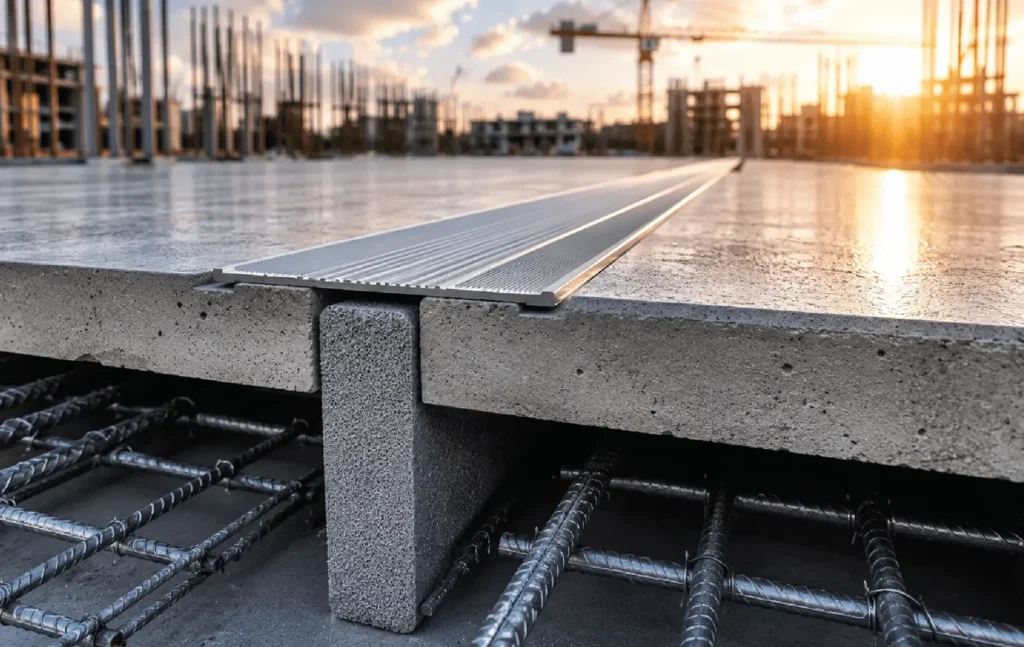
Elements that are concrete shift with the temperature and materials contract, loads are exerted and neighbouring structures settle differently. Joints between slabs, walls, columns, foundations, pavements and other parts of the concrete are planned to allow control over the separation between them. An appropriately defined fillerboard can be used to preserve the desired spacing between joints without the elements that surround it to slide directly against each other.
Best International Contracting Company provides expansion joint filler board Saudi Arabia construction and industrial project can order to approve the use of concrete-joints. We assist contractors, procurement teams and project engineers in sourcing of products, documenting, planning on the quantity and packing and delivering these products to the appropriate project sites.
The approved drawing, bill of quantities or material specification must be considered to decide which board is needed. The thickness, width, length, material composition, compressibility, recovery, water resistance, edge condition of the product and manufacturer requirements can vary depending on the project. We do not presume that all joint fillerboards are alike but we review the entire enquiry.
A common use of fibreboard as a compressible joint filler in concrete construction is bitumen-impregnated. It comes in sheets or strips and is installed in one of the predetermined locations of the joint in front of or during the concrete work, as per the approved installation detail.
KSA is our bitumen impregnated filler board service that can be used to meet the needs of appropriate civil and building, infrastructure and industrial applications. Different manufacturers and grades of products have different product properties, and thus the board offered must be compared with the approved data requirements of the project prior to purchase.
Fillerboard fulfills another purpose as compared to the exposed joint sealant. It seals the depth of the joint or spaces between adjacent concrete structures and sealant and backing materials might be necessary at the joint face. The entire joint system must be in accordance with the design.
The filler board Saudi Arabia enquiries have been generally raised on the bitumen impregnated fibreboards to be used in the expansion and isolation joints in concrete works. Whether the project needs a specific manufacturer, approved equivalent or board meeting defined performance and documentation requirements should be determined by the customer.
In case the name Hunton is employed as a project description, it should not be supposed that any board of bitumen will be adopted. Before supply, the approved make, country of origin required, thickness, sheet size, technical data, test/submittal status, should be verified.
BIC will be able to analyze the content request and find out the materials that are required to be quoted. The ultimate approval is with the customer, consultant or project authority who will approve the materials.
Concrete Floor and Slab Joints
Fillerboard can be employed in intended separation joints in concrete floors, external slabs, hardstand area and industrial flooring. The combined layout, the depth and thickness of the board must be in accordance with the approved drawings.
In areas where vehicle traffic, chemical exposure or heavy operation use is likely, the exposed sealant and edge protection requirements should also be addressed in the entire detail of the joints.
Bases and Foundations
Isolation joints can be needed between foundations and equipment bases, columns, walls and adjoining slabs. The fillerboard assists in maintaining the separation that is developed and minimizes direct contact between autonomously moving components.
The project engineer must ensure that the board is full depth, partial depth or other materials mixed with other joints.
Walls, Columns and Structural Interfaces
Compressible fillerboard may be necessary to fill concrete walls, columns and structural interfaces where separation is required by the design. The board widths or shapes might be required to be cut to fit the joint detail.
Any cutting/prefabrication specification must also be enquired along with tolerances and packaging specifications.
Roads, Pavements and External Concrete
Appropriate fillerboard can be indicated in concrete pavements, kerbs, channels and walkways or other external works. Selection, storage and installation of the product should take into account the exposure to water, sunlight, change in temperature, and construction traffic.
The board should be kept protected until installation and should not be left damaged, distorted or contaminated within the joint.
Drainage, Utility and Infrastructure Works
Joint filler can be needed to surround concrete channels, culverts, chambers, utility structures and the like in infrastructure projects. The drawing ought to determine the position of the joint and the dimensions of the board needed.
The entire approved joint system should be checked where the joint is subjected to constant water pressure or subjected to an arduous chemical environment. Fillerboard per se is not to be offered as waterproofing system.
Building and Architectural Concrete
Fillerboard can be used as an interface between slabs, walls, column, kerbs and other elements of concrete. Waterproofing and movement-joint profiles where these are a part of the design should be coordinated with the product.
The visible joints should be paid special attention to so that the depth of the boards can enable the required surface treatment to be properly installed.
Notable difference: Fillerboard is a compressible material used as joint-filling. Neither is it necessarily a joint sealant, waterstop, waterproofing membrane or structural repair product. Where necessary, sealants and other parts of joints should be specified separately.
The question must mention the necessary thickness, width, length and number. The sheet size and thickness offered by different manufacturers are standard and project drawings might need strips of entire boards.
In case of cut strips, the customer is expected to supply the width, length, tolerance, labelling and packing arrangement that is completed. The joint length and joint depth, cutting yield, laps where practicable and sensible site wastage should be taken into account in quantity calculations.
BIC has the ability to quote complete sheets, cut pieces or a combination where it is commercially and technically viable. Before production or cutting can commence final dimensions should be checked as the customised material is not always returnable.
The evaluation of products should be done on the basis of the approved project requirement and available technical data of the manufacturer. The review can cover the specification of board composition, density, compressibility, recovery, extrusion resistance, water absorption, durability, temperature appropriateness, and compatibility with adjoining joint materials, depending on the specification.
The customer or identified in the approved standard should provide required values. BIC does not use an unspecified board to assign performance values, or substitute the engineering review of a project.
In case an alternative product is given it should be made clear through the technical comparison whether there are any variations in the composition, dimensions, performance, documentation and manufacturer. Prior to delivery, they should be approved.
BIC being a supplier of concrete joint filler boards, deals with enquiries that are on the basis of drawings, bill of quantities, specifications and approved material descriptions. Comprehensive request enables the quotation to capture the board needed as opposed to a generic construction product.
The investigation should establish the type of the joint either an expansion joint or an isolation joint or a different joint that is meant to separate. It must also provide a statement of concrete application, joint sizes, exposed environments, sealant recess required and list of manufacturer approved by consultants.
Rebuilding of joint is not a part of material supply. In the case where the specifics are ambiguous or unrelated, the concerned engineer must verify with the intended construction prior to an order being placed.
KSA service is our expansion joint board supplier that is able to serve individual material requests and planned project packages. Orders can be sorted by building, area, concrete pour, or work front or required-on-site date.
In the case of phased construction, the delivery schedules must be synchronized with the activity on concrete, and dry storage. Overstocking and ordering late may cause handling and storage exposure that are not necessary, and scheduled pours may be disrupted by ordering late.
Any cutting sequence or area labelling or packaging separation to make distribution within the site easier should be identified by the project team.
BIC is a filler board supplier that the contractors in Saudi Arabia can approach with a material requisition, quantity schedule or approved data requirement. Prior to preparing an offer, we check product type, dimensions, quantity, manufacturer conditions, documentation and delivery location.
In case the order is not met, any alternative provided is found to be reviewed. We do not suggest varying the thickness, composition or manufacturer without the consent of the customers.
The approved description and dimensions must still be given by the customer in case of some urgent requirements. Confidence should not be superseded by speed in cementing the content that has been put permanently in a concrete joint.
The necessary documents can be a technical datasheet, a manufacture information, a compliance statement, a test or examination report, a country of origin or a packing list material submittal documents. The precise list ought to be mentioned during enquiry level.
The availability of documentation may be different among manufacturers and products. An appropriate record must thus be verified prior to the customer accepting the quotation.
Where the project needs to be controlled in receiving and distribution, packages should be distinguishable, by product, thickness, dimensions and quantity. All project specific labels must be given prior to the packing.
The amount of fillerboard is normally correlated with the area of joint as opposed to its linear length only. The joint depth/board width, the thickness of the sheet, the size of the sheet, the cutting layout and anticipated wastage should be taken into account in the calculation.
BIC will be able to check the provided quantity schedule and identify lacking dimensional information. The ultimate take-off lies in the hands of the customer unless a distinct measured scope has been agreed.
Shifts in the depth of the joints or the thickness of the board may have a significant influence in the quantity demanded. New drawings are to be communicated by the time it is cut or dispatched.
Boards should be packed and transported in a manner that reduces bending, edge damage, moisture exposure and contamination. Strips cut could need to be bundled or boxed in such a way that the dimensions can be recognized.
On-site, the material must be stored flat or otherwise as per the manufacturers specifications, rain, standing water and excessive heat should be kept away, it should not be in direct contact with contamination and damage of construction. The heavy materials are not to be piled up in such a manner that the boards are likely to get permanently deformed.
Review of boards should be done before installation, damaged, saturated, broken or highly distorted boards. Materials that can no longer sustain the desired shape of the joint should not be used by the site teams.
The position of the board should be at the approved joint line and should be secured as necessary, so that it does not move during the reinforcement, formwork or concrete placement. The sealant or surface treatment indicated should be permissible in the top level where indicated.
There should be no concrete bridges that overcome the intended separation of joints. Connections, corners and intersections must be in accordance with the approved detail.
The contractor or party that is named in the project scope is the one in charge of installation. The material and supporting documents provided by the order are supplied by BIC, however, it does not substitute site engineering, supervision or inspection.
Industrial Facilities
Fillerboard to fit concrete slabs, foundation, equipment base and structural interfaces.
Commercial and residential buildings.
Joint-filling materials for approved building, floor and external concrete details.
Road and Infrastructure Projects
Appropriate pavement, kerb, channel, utility and civil construction joint boards.
Warehouses and Logistics Facilities
Planned slab, wall, column and hardstand separation joints material.
Water and Utility Structures
Approved chamber, channel, culvert and supporting concrete work fillerboard.
Marine and Port Facilities
Appropriate project requirements that are subject to the approved exposure, joint and material specifications.
1.Receive the material request
The specification, drawing, dimensions, quantity, approved make and delivery location are shared by the customer.
2.Clarify the joint and product details
We check board type, thickness, sheet size, size of cut-strip, documents and date needed.
3.Source the specified product
An appropriate availability is checked concerning the mentioned manufacturer and technical specifications.
4.Present the offer of commercial and technical.
The suggested product, dimensions, documents, and packing basis, exclusions and delivery are determined.
5.Complete material approval
Coordination of technical submittals, samples or clarifications may be made where necessary.
6.Prepare and deliver the order
Board approved and packed, labelled and shipped as per agreed schedule of supply.
The fillerboard needs can be evaluated on appropriate projects throughout Saudi Arabia. BIC facilitates queries of the locations of Jubail, Dammam, Khobar and other places in the Eastern Province, Riyadh, Jeddah and other areas of the project.
The time of delivery will be based on the approved product, size, volume, cutting need, paperwork and transportation set up. Complete information should be provided with urgent needs in order to verify their availability without unnecessary delay of technical procedures.
Best International Contracting Company serves the needs of contractors and industrial clients by supplying materials, providing manpower, equipment rental and contracting services. This broader project experience will enable our team to appreciate how dates of procurement, approvals, concrete dates, access to storage and delivery of materials impact on material supply.
We maintain category of materials clear. Fillerboard to concrete joints is discussed on this page. Metals, pipes, fittings, valves, rigging materials, PPE, marine materials and scaffolding products can still be found on their respective pages.
We are founded on the correct dimensions, description of products, and customer approval. Every request is verified to be available, documented and delivered as opposed to being assumed.
It is a standard filler in the approved concrete expansion or isolation joints, which are compressible. The entire joint specification ought to be based on project drawings and specification.
No. Fillerboard is put in the joint space, sealant can be applied at the exposed surface. All products have a different functionality.
Needs that are known as Hunton fillerboard can be checked with the approved brand, size, technical information and project report.
Give the board thickness, cut-strip size (where applicable), sheet width and sheet length, quantity and date required.
Cut strips can be evaluated at the time of supply of the completed dimensions, tolerance, quantity, labelling and packing requirements.
The automatic substitution is not to be made. Composition, properties, dimensions and documentation should be reviewed and approved by the customer.
Fillerboard by itself should not be considered a system of waterproofing. Waterstops: under the approved design, waterstops may be necessary, sealants or membranes.
Depending on the chosen product, documents available can contain technical information, manufacturer information, compliance records, test reports and packing documents.
It must be kept dry, clean, safe and free of damage and deformation and kept as per the instructions of the manufacturer.
Jubail, the Eastern Province and other Saudi project locations, have an opportunity to have suitable deliveries, which depends on the availability of the products and terms of the agreed orders.
Please provide us with the approved product description, thickness required, size of the sheets or strips, quantity, location of the project, documentation requirements and delivery date required. Our group will keep a check on the request and could determine the information required prior to the preparation of the offer.
To fillerboard (expansion-joint) needs in Jubail, the Eastern Province or other Saudi project site, please contact Best International Contracting Company with the associated drawing, specification or bill of quantities.
Provide information about the type of board, its thickness, size, number of boards, place of project and delivery date.
Request a Fillerboard Quotation →Have questions or need assistance? Reach out to us—we're here to provide the support and information you need, every step of the way.



Copyright © 2024 Best International Contracting Company, All rights reserved.
