

Choosing the right construction machinery can
make a significant difference to project productivity, operational efficiency,
and overall expenses. Learning about excavator vs wheel loader capabilities
will assist a contractor to find equipment that aligns with his major
operations. The two machines are used to support earthmoving activities but
they have different functions. Excavators are only used in digging, trenching
and demolition whereas wheel loaders are used to collect, transport and load
loose material effectively within appropriate construction sites.
Contractors need to consider their real
workload, ground conditions, and material volumes and site accessibility before
organizing Excavator & Wheel Loader Rental. The right choice must be based
on the primary construction activity and not just on the size of machines or
rental cost. Knowing equipment capabilities, operating requirements and project
priorities can enable businesses choose appropriate equipment and ensure a
productive construction process.
What Is the Difference Between an Excavator and a Wheel Loader
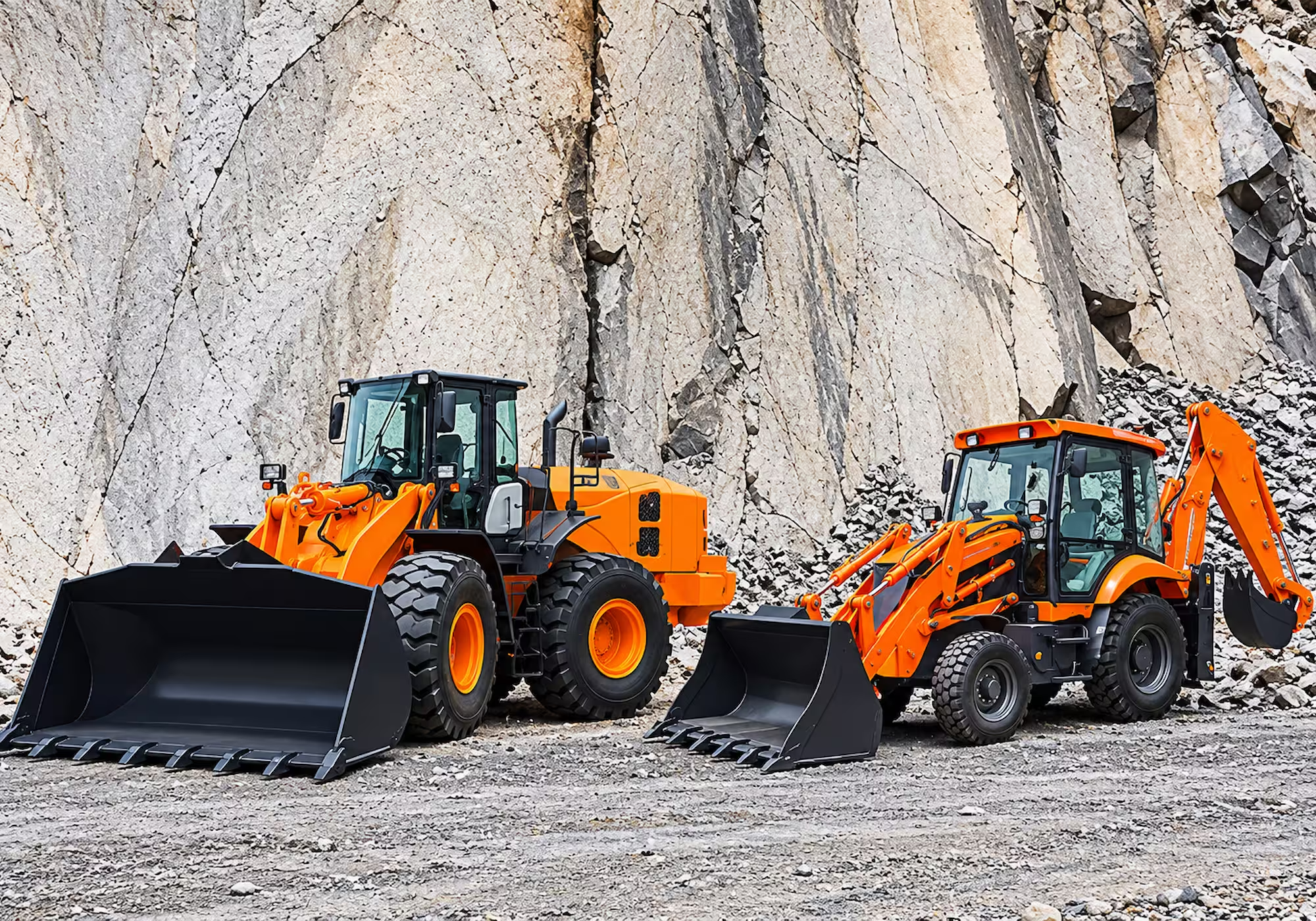
An excavator consists of a rotating upper
structure, hydraulic boom, arm, and digging bucket which is mounted on tracks
or wheels. It mainly does excavation, trenching, lifting and demolition. The
wheel loader is equipped with a bucket on the front, articulated steering and
large tyres which are used to collect, transport, and load loose material.
Their modes of operation are also quite
different. Excavators controlled hydraulic motions to excavate and access
varied depths whilst loaders unite the movements of buckets and the forward
movement. The knowledge of the wheel loader vs excavator differences assists
contractors to align machinery to certain construction needs.
When Should You Use an Excavator?
Foundation and Trench Excavation
Excavator is best suited in the preparation
of foundation, footing excavation and trenching. Using an excavator for
trenching and foundation work enables the operator to excavate soil in the
correct manner, maintain the necessary depth of excavation and create stable
foundations to build on.
Underground Utility and Drainage Work
The installation of underground pipelines,
drainage channels, and electrical conduits entails proper excavation.
Excavators prepare trenches, cut away obstructive soil, and offer restricted
accessibility about current infrastructure and assist in supporting crucial
underground construction and maintenance operations.
Digging Below Ground Level
Deep excavation work involves machinery that
can reach below ground levels in the immediate area. Excavators offer long boom
extensions and specialised buckets which allow the operators to excavate soil
in a systematic way and yet at appropriate excavation sizes and work
clearances.
Demolition and Suitable Attachment-Based Work
Excavators assist in the demolition process
with hydraulic breakers, crushers, grapples, and special purpose attachments.
These tools assist the operators in breaking concrete, removing structures, and
handling debris as well as accomplishing site preparation tasks of choice with
versatile machinery.
When Should You Use a Wheel Loader?
Loading Aggregates into Trucks
Wheel loaders are effective in collecting
sand, gravel, crushed stone and other aggregates and loading them in dump
trucks. Their large front buckets allow them to load repeatedly, which enables
contractors to keep their material transportation schedules and enhance
productivity on the site daily.
Moving Stockpiled Materials
Using a wheel loader for material handling
helps contractors collect, transport, and relocate stockpiled aggregates
efficiently. Its bucket capacity facilitates repetitive actions in between
storage facilities, loading devices and assigned construction zones on
appropriate surfaces.
Handling Loose Soil and Sand
Wheel loaders can be used to collect and
transport loose soil, sand, gravel and other materials. They have front buckets
that have a good loading capacity, which assists in repeated movements of
material across the available construction sites and storage facilities.
Loading and Relocating Materials Around Suitable Sites
Wheel loaders assist in the movement of
construction materials, removal of loose debris, as well as provision of
specific areas of work. They are manoeuvrable and this aids in the movement of
materials efficiently provided the ground conditions, adequate turning space,
and proper travel routes are in place.
Excavator vs Wheel Loader: Key Differences
Understanding the wheel loader vs excavator
differences requires examining their operating mechanisms, digging
capabilities, loading performance, mobility, and suitability for different
construction environments. The two machines although useful in earthmoving
activities, their output relies on the performance of the machines in relation
to the being carried out work.
The comparison that follows shows the key differences that the contractors ought to make when choosing equipment.
| Comparison Factor | Excavator | Wheel Loader |
|---|---|---|
| Primary function | Digging, trenching, excavation, lifting, and demolition | Collecting, transporting, and loading loose materials |
| Digging ability | Excellent for deep excavation, foundations, and trenches | Limited digging ability; mainly suitable for shallow material collection |
| Loading efficiency | Can load excavated soil into trucks with appropriate positioning | Highly efficient for repeatedly loading loose materials into trucks |
| Mobility | Available in tracked and wheeled configurations | Tyred construction supports movement across suitable firm surfaces |
| Ground conditions | Tracked models provide stability on many soft and uneven surfaces | Performs best on firm, reasonably level, and stable ground |
| Working space | Requires clearance for boom rotation, digging, and attachment movements | Requires sufficient turning space and travel routes for material transportation |
| Suitable applications | Foundation excavation, trenching, drainage, demolition, and underground utilities | Aggregate handling, stockpile management, truck loading, and material transportation |
Which Machine Is Better for Different Construction Projects?
The best machinery to use will be based on
the construction activity, material needs, working conditions, and
productivity. Knowing the excavator and wheel loader uses in various
applications will assist the contractor to decide what equipment will provide
superior operations.
Foundation Excavation Projects
Excavators are more appropriate in foundation
excavation as they offer controlled excavation depth, precise positioning of
buckets, and efficient elimination of soil. Their hydraulic arms facilitate the
preparation of footing, foundation trenches and underground construction works
effectively.
Road Construction Projects
The construction of roads often involves the
use of the machines in different tasks. Excavators eliminate inappropriate soil
and prepare drilling trenches, wheel loaders carry the aggregates, load trucks,
and distribute loose materials on the appropriate sections of roads.
Aggregate Yards
Wheel loaders are typically more viable in
the case of aggregate yards since it involves the repetitive collection,
transportation and loading of loose materials. Their heavy buckets favour
stockpile control, which assists the operators to have regular material flow
and well-organised loading process.
Industrial Construction Sites
Industrial construction could be associated
with the excavation, demolition, transportation of materials and equipment
movement. Excavators are in charge of foundations and underground
installations, and wheel loaders are in charge of moving aggregates and debris
throughout the available space to meet complementary tasks.
General Site Preparation
General site preparation entails the removal
of loose material, soil removal, level the suitable surfaces and moving the
construction supplies. The deeper soil removal is performed by excavators and
materials are distributed and organised working spaces by wheel loaders.
What Factors Should Contractors Check Before Selecting a Machine?
The appropriate choice of construction
machinery depends on the project needs and the conditions on the site. An
effective earthmoving equipment selection guide must take into account the
following prior to contractors making up their equipment rental plans.
·
Task
requirements: Determine whether the project is mostly digging, trenching,
demolition, loading, or transportation of loose construction materials
·
Soil and
ground conditions: Learn the soil composition, moisture level, surface
stability, and the terrain to find out what machine can work properly
·
Access
control: Examine the size of access entrances, overhead space, turning area,
and barriers around the area prior to choosing the machinery
·
Material
volume: Determine the volume of soil, aggregates, sand, or debris that needs to
be excavated, transported or loaded
·
Operating
hours: Estimate the number of hours worked each day and project time to measure
the availability of machinery and its efficiency
·
Attachments:
Determine whether specialised buckets, hydraulic breakers, forks, or other
compatible attachments are necessary for planned activities
·
Transportation:
Consider equipment dimensions, mobilisation requirements, transportation
arrangements, and site accessibility when moving machinery between locations
·
Project
total cost: Assess rental, fuel, transportation and operator costs, attachment
requirements and possible downtime
Should You Rent an Excavator, a Wheel Loader or Both
Hiring an excavator can be appropriate when
the main task is an excavation of foundations, trenching, installation of
drainage, demolition. When the contractors are likely to collect aggregates,
fill the trucks, and move loose materials around available construction sites,
the use of a wheel loader is more suitable.
Excavation and material transportation
projects can be good candidates to rent the two machines. Their complementary
roles facilitate easier workflows, but the choice should not be based on the
assumption that one arrangement is necessarily cheaper, but instead it should
be based on the workload, schedules of operations, the availability of the
equipment and the cost of the entire project.
Frequently Asked Questions
Can a Wheel Loader Replace an Excavator?
No. A wheel loader can efficiently work with
loose materials but is not as effective as an excavator in digging depth,
trenching accuracy and excavation potential.
Which Machine Is Better for Loading Dump Trucks?
A wheel loader is usually more appropriate
since the front bucket can facilitate repeated picking and effective loading of
loose construction materials.
Which Machine Is Suitable for Digging Trenches?
The preferred choice is an excavator as it has
a hydraulic boom and bucket which digs at various depths and widths.
Can Both Machines Be Used on the Same Construction Project?
Yes. Excavators are used to do digging and
demolition and the wheel loaders are used to move aggregates and to move loose
materials and assist with truck-loading.
Explore Equipment Rental Options for Your Project
Identifying the right machinery can enable
the contractors to keep track of the construction schedule and run the
activities within the site in an efficient manner. When negotiating their
machinery needs, contractors can see a possibility to rent equipment using
bestincontracting. Consider the equipment, rental situation, the duration of
the project and the requirements of the operation and then make a decision.
Making the right selection of machinery aids in enhancing productivity,
organization of construction work, and preventing unreasonable delays of
projects due to the interference of machinery.
Conclusion
Understanding excavator vs wheel loader
capabilities helps contractors make informed construction equipment decisions.
Excavators are mainly efficient in digging, foundation preparation, trenching
and demolition whereas wheel loaders are efficient in collecting, transporting
and loading loose materials. The correct decision is dependent on the project
activities, the ground conditions, working space, and the amount of materials.
Assessing these needs prior to equipping the business assists companies to
enhance productivity, resource management and prevent equipping them with
machinery that is not in line with their business requirements.
For excavator vs wheel loader for construction projects, contractors should consider whether one machine can meet their requirements or whether both are necessary. Integrating complementary equipment can help facilitate the smoother processes during excavation and material handling that occur concurrently. Proper planning, attachments, expert operators and proper rental arrangements will result in successful construction operations as well as assist in keeping project timelines and budgets intact.