

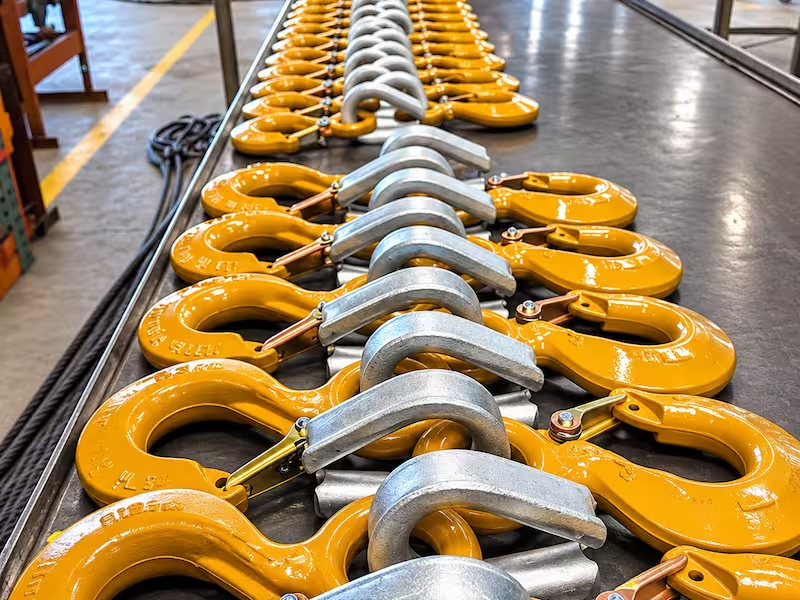
Understanding how to read a lifting sling tag is essential for ensuring safe and efficient lifting operations. Each lifting sling is equipped with certain identification and capacity information that can assist the operator in choosing the right equipment to lift a given load. The tag contains the valuable information concerning the manufacturer, sling material, capacity rated and approved lifting configurations, which assist to avoid overloading and breakage of the equipment.
When buying https://www.bestincontracting.com/services/industrial-material-supply/rigging-materials/Slings, Shackles & Rigging Materials knowing these markings simplifies the
process of selecting equipment. The ability of a sling cannot be ascertained by
its colour, appearance or its thickness. Correct reading of its identification
tag aids lifting teams to ensure that it is appropriate before embarking on any
lifting task.
What Is a Lifting Sling Identification Tag?
A lifting
sling identification tag is a tag that is fixed on the sling and whose label
shows significant product and capacity data. It aids the users in determining
the manufacturer, material, specifications and approved working configurations.
The tag
should not come off, or be dirty or illegible during the life of the sling.
Labels are often sewn onto webbing and round slings and may be metal
identification tags on wire rope and chain slings. Sling marking requirements
vary based on the construction of slings and standards used.
What Does WLL Mean on a Lifting Sling?
Working Load
Limit (WLL) is the maximum weight that a sling is rated to lift given certain conditions.
Knowledge of the lifting sling WLL meaning assists the operators to choose
equipment that is not beyond the recommended capacity.
WLL is
different with breaking strength which is the force at which a sling can break.
The working load limit of lifting sling varies based on its material, structure and
design. Do not overload the capacity indicated by the manufacturer when
lifting.
Key Information Printed on a Sling Tag
A sling
identification tag may have various crucial information which will assist
operators to confirm equipment specifications prior to being used.
·
Manufacturer
name or trademark identifying the company responsible for the sling
·
Product code
or stock number identifying the particular sling model
·
Serial or
individual identification number, where applicable, to trace products
·
Sling, or
chain grade, as per the construction of the equipment
·
Rated load
information for the specified hitch type and lifting angle
·
Number of
legs for multi-leg sling assemblies
·
Sling size,
length or reach, where applicable to the product
Specifics
depend on the type of sling, construction and manufacturing standards
applicable. As such, users must not expect them to be the same markings on all
sling identification tags.
Understanding the Three Main Sling Hitch Types
Different
lifting sling hitch types are useful to understand since a sling with the same
rated capacity will be able to have varying rated capacities based on its
connection to the load. Never set up intended arrangement without comparing to
the capacity chart of the manufacturer.
Vertical Hitch
A vertical
hitch is where the sling is attached between the lifting point and the load,
and forms a straight lift. To know how to read a lifting sling tag, examine the
vertical rated capacity on the tag printed by the manufacturer. Make sure that
the load is not exceeded and that the points of attachment are tight.
Choker Hitch
A choker
hitch is a rope that is passed over the load and then knot tightened under
tension to aid in materials security during lifting. Its rated capacity varies
according to the sling design, the choking arrangement and contact conditions.
It is always better to have a look at the chart provided by the manufacturer
rather than thinking that the vertical rating should be used in this set up.
Basket Hitch
A basket
hitch, with the load being carried by a sling that runs under it, forms two
supporting parts. It is dependent on the contact conditions and load balance as
well as the sling angle. Confirm the rated capacity of the manufacturer of the
particular basket set up and then start the lifting process.
What Is a Sling Angle and Why Does It Matter?
Sling angle
refers to the relationship of a sling leg with either the horizontal or
vertical axis. These measurements vary hence operators should be aware of what
reference the load chart the manufacturer uses. This may cause wrong
calculations of the capacity by mixing the two.
As the angle
decreases from the horizontal tension in each sling leg increases. This is a
direct sling angle factor which influences lifting capacity. OSHA
rigging instructions caution against less than 30 sling angles that are
horizontal unless suggested by the manufacturer or a qualified individual. This
should not necessarily be construed as a Saudi regulatory obligation.
How to Read Tags on Different Types of Slings
The marking
and identification requirements of the different sling materials are different.
To choose equipment, operators need to know what information is offered on each
of the types of constructions.
·
Synthetic
webbing slings: Check the sewn identification label for manufacturer details,
material, rated capacities, length and approved hitch configurations
·
Polyester
round slings: Check the label that protects the identification of WLL, the
manufacturer, and sling specifications and capacity ratings
·
Wire rope
slings: Check the metal or attached identification tag for rated capacity, rope
diameter, length, construction and manufacturer details
·
Alloy steel
chain slings: Examine the identification tag for chain grade, size, working
load limit, manufacturer details and the number of sling legs
When reading
markings always consult the documentation of the manufacturer especially when
the information is displayed differently on the sling materials.
What Should You Check Before Using a Lifting Sling?
The
operators should ensure that they identify their slings, rated capacity and
physical state before using it. Knowing how to identify
sling capacity can be used
to avoid the wrong choice of equipment and minimize the danger of lifting.
·
Check the
presence of the identification tag and its legibility
·
Ensure the
tag is the same as the sling and its paperwork
·
Check the
rated capacity is appropriate to the intended lifting arrangement
·
Ensure the
sling has undergone the required inspection
·
Look for
visible damage, deformation, wear or deterioration
·
Check the
compatibility of lifting accessories and attachment points
·
Ensure
competent personnel have planned and approved the lifting operation
A sling must
not be put on in case of uncertainty with regard to its identity or state.
Equipment that is damaged should not be left to operate until the appropriate
qualified individual has examined the equipment.
Common Mistakes When Reading Sling Tags
Misinterpretation
of the sling marks may lead to wrong choice of equipment and hazardous lifting.
The following are some of the pitfalls that operators should not make:
·
Treating WLL
as equivalent to breaking strength
·
Applying the
vertical capacity rating to a different hitch configuration
·
Ignoring
sling angle changes when calculating lifting capacity
·
Choosing a
sling through colour instead of identification marks
·
Using
equipment with missing, damaged or illegible identification
·
It is
assumed that all sling materials have the same marking requirements
·
Overlooking
the manufacturer's capacity chart and operating instructions
·
Ignoring the
number of supporting legs in a multi-leg assembly
·
Using
damaged slings without proper inspection and assessment
·
Presuming
that any lifting arrangement can use a higher-rated sling
OSHA
particularly warns users to choose round slings by the rated load provided on
the identification label and not by colour. This stresses the need to verify
the real product marking prior to lifting.
Frequently Asked Questions
1. What does WLL mean on a lifting sling?
WLL refers
to Working Load Limit, the heaviest load that a sling can be correctly lifted
under certain circumstances.
2. Where can I find the rated capacity on a sling tag?
Find the
rated load of the manufacturer and this is normally shown in conjunction with
the hitch and the angle.
3. Does sling capacity change with the hitch type?
Yes, rated
capacitys differ with the type of sling vertical, choker or basket hitch.
4. Why does sling angle affect lifting capacity?
Smaller
horizontal angles will upsurge sling leg tension, which may decrease the load
bearing of the arrangement.
5. Can a lifting sling be used if its tag is missing?
No, get it
out of service until its identity and its rated capacity can be clearly determined.
6. Are chain sling and webbing sling tags different?
Yes, they
are marked differently by materials, construction, grade and requirements that
can be used in manufacturing.
Source Quality Rigging Materials for Industrial Projects
To ensure
safety and efficiency of operations of various industrial projects, selecting
quality lifting equipment is necessary to cater to the various
material-handling and lifting needs. bestincontracting provides Slings,
Shackles and Rigging Materials. In search of the right rigging products,
businesses can consider the load capacity, the specifications of materials,
compatibility and application requirements of equipment. Call the team to talk
about your procurement requirements, find the right products and source the
quality rigging materials to your industrial business.
Conclusion
Learning how to read a lifting sling tag assists operators to make sound decisions
prior to each lifting activity. Verification of the working load limit, hitch
configuration, sling angle and material specifications are done to ensure
equipment is in line with the intended use. Identification marks are also
useful to ensure that the users identify inappropriate or spoiled slings before
they lead to possible safety hazards. Always be careful not to use colour or
appearance as determining lifting capacity.
Proper equipment selection, inspection and planning are the beginning of safe lifting. Always adhere to instructions of the manufacturer, refer to the corresponding capacity charts and engage skilled staff when required. Selecting quality rigging materials with trusted suppliers will also contribute to safer material-handling processes and reliable industrial operation.