

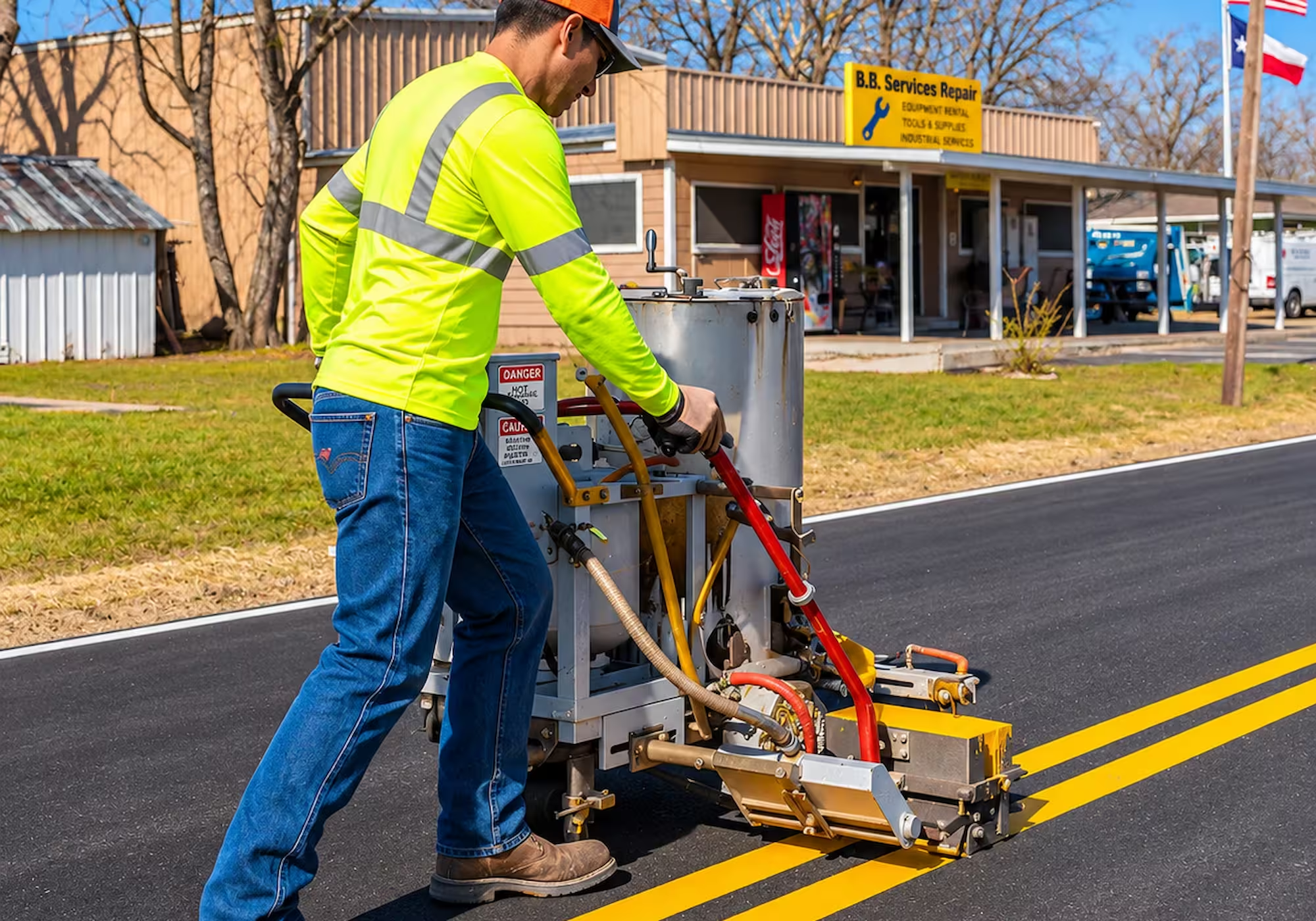
Choosing the right road-marking material is essential for creating safer, more organised and durable road surfaces. On highways and parking areas, road markings direct motorists, enhance safety of pedestrians and assist in the smooth flow of traffic. The knowledge of thermoplastic vs cold applied road marking can be used by contractors to determine the most appropriate solution depending on the visibility, durability, application factors and maintenance costs over a long period.
To infrastructure developers and contractors,
the choice of appropriate materials can also impact on project efficiency and
cost of operation. Professional Road Marking Services
in Saudi Arabia are used to
make sure that markings are suitable to the requirements of the project and work
well in the local conditions. To develop effective solutions to road-marking,
it is easier to plan the solutions based on the available materials.
What Is Thermoplastic Road Marking?
Thermoplastic road marking- Thermoplastic
road marking is a strong material that consists of synthetic resins, colorants,
fillers and glass beads. It is melted down and spread on prepared road surfaces
with specialised equipment. When used it solidifies and forms a very visible
marking that is very adhesive and resistant to wear.
The surface can be enhanced with glass beads
to enhance nighttime retroreflectivity. This is a thermoplastic
road marking material that is
normally employed in highways, intersections, pedestrian crossing, on parking
areas and any other areas that need strong road markings.
What Is Cold-Applied Road Marking?
Cold-applied road marking involves the use of
liquid coatings which do not require heating of the material. This is because
conventional cold applied road marking paint is normally done by hand with the
use of brushes, rollers or spray equipment depending on the product and project
needs.
The other alternative is a two-component MMA
cold plastic that cures upon mixing by a chemical reaction. The formulation,
temperature and surface conditions have an impact on application time and
curing time. These can be used in roads, parking areas and industrial places.
Thermoplastic vs Cold-Applied Road Marking: Key Differences
Knowledge of the distinction between these
materials assists the contractors to choose a suitable solution to a particular
infrastructure need. This road marking material comparison considers important
performance and installation characteristics. Comparison between thermoplastic road marking vs paint also entails comparing the costs of
installation, anticipated life, level of maintenance and appropriateness to
various traffic conditions.
1. Durability and Wear Resistance
Thermoplastic markings tend to be very
resistant to abrasion and frequent traffic movements. MMA systems also may provide
good durability and the traditional cold-applied paints might need renewing
more often in cases of high traffic.
2. Application Process
Thermoplastic involves special heating
machinery to melt down the material and then use it. Cold-applied products can
be typically installed with rollers or spray machines or brushes and the
installation process will not be heavily reliant on heating equipment.
3. Curing and Setting Time
Markings made of thermoplastic become solid
during cooling. Depending on the formulation, cold-applied coatings need to dry
or cure with chemicals. MMA systems tend to cure by a chemical reaction as
opposed to evaporation.
4. Initial Installation Costs
Thermoplastic installations might also entail
a greater cost of equipment and installation due to heating needs. Painting
that is more traditional by applying cold paint may be less expensive to apply
initially, but the choice of a material, labour expenses and project magnitude
determine the total cost.
5. Maintenance Requirements
Properly installed and exposed to appropriate
conditions, thermoplastic markings can minimize the number of maintenance.
Cold-applied paint might require increased inspection and repainting whereas
tougher MMA systems may last longer.
6. Traffic Conditions and Usage
Highway, intersections and roads with heavy
traffic are often chosen with thermoplastic due to its resistance to wear. MMA
is also capable of operating in challenging traffic situations, based on
product specifications and quality of installation.
7. Surface Compatibility
The two materials may be used on appropriate
asphalt and concrete surfaces provided the appropriate requirements of
preparation and primer are adhered to. Adhesion and long-term performance are
dependent on surface condition, moisture, contamination and product
compatibility.
Which Road Marking Material Is Better for High-Traffic Roads?
Roads that have heavy traffic have a constant
flow of vehicles, friction and exposure to environment. These places are
usually favored to be covered by thermoplastic due to the hardened structure of
the material that can withstand massive mechanical abuse. It is often used on
lane lines, pedestrian crossings and stop lines and intersections where
visibility is a factor of concern.
Nevertheless, MMA systems can also offer
great performance under challenging conditions. When it comes to choosing road
marking materials to be used in highways, one has to consider the volume of
traffic, anticipated service life, retroreflectivity and maintenance cycle.
Contractors are advised to compare specifications of the products as opposed to
using the same material in all roads.
Which Material Is Suitable for Parking Areas and Industrial Facilities?
The heavy traffic roads have constant traffic
flow, friction and exposure to the environment. The most typical choice of
plastics in these areas is thermoplastic due to its hardened structure and
ability to withstand a significant amount of mechanical wear. It is commonly
applied on lane lines in pedestrian crossings, stop lines and intersection
where visibility and road marking durability are essential.
Nonetheless, MMA systems are also able to
work in harsh environments. The choice of road marking
materials for highways must
consider the traffic volume, anticipated life of service and retro reflectivity
and maintenance cycle. Before deciding on an appropriate material on busy
roads, contractors ought to compare the specifications of the manufacturers
with the requirements of the project.
How Does Saudi Arabia's Climate Affect Road Marking Material Selection?
Saudi Arabia's climate creates several
challenges for road-marking installations. The effect of high pavement
temperatures and high UV exposure may be on the performance of materials,
colour stability and adhesion. Before choosing a thermoplastic road marking
material or a cold-applied material contractors should take into consideration
application temperatures, manufacturer suggestions and appropriate surface
preparation.
Installation quality and service life can
also be impacted by dust, contamination and heavy traffic loading. Surface
should be ready and well cleaned to attain good bonding. Because different
project locations have different climatic conditions, the appropriateness of
materials should be dictated by manufacturer information, approved
specifications and application-specific requirements of the product.
What Factors Should Contractors Consider Before Selecting Road Marking Materials?
Several considerations should be made before
a contractor agrees on his/her choice of materials
·
Road surface
type and condition
·
Expected
traffic volume and vehicle loading
·
Required
service life
·
Retroreflectivity,
and nighttime visibility specifications
·
Temperature
and application conditions
·
Available
installation equipment
·
Accessibility
and frequency of maintenance
·
Approved
project specifications
·
Material
compatibility with existing markings
·
Installation
and operational costs
Common Road Marking Material Selection Mistakes
Choosing the wrong product may influence
safety, maintenance and performance costs. These are some of the mistakes that
contractors should avoid
·
Selecting
materials on the basis of the initial price
·
Not
considering the installation pavement temperature
·
Ignoring the
need to prepare surfaces
·
Applying
incompatible materials over existing markings
·
Leaving out
traffic volume and vehicle loading
·
Ignoring
glass bead and retroreflectivity requirements
·
Choosing
items without verifying the specifications with the manufacturers
·
Applying
materials outside recommended temperature ranges
·
Ignoring the
presence of moisture and contamination on surfaces
·
Failing to
consider future maintenance requirements
·
Disregard of
accepted project standards
·
Not allowing
sufficient curing or cooling time
Frequently Asked Questions
Is thermoplastic road marking better than paint?
In favourable conditions, thermoplastic can
be more wear-resistant and have a higher service life compared to conventional
road-marking paint.
How long does thermoplastic road marking last?
It may take a number of years, depending on
the traffic, quality of the materials used, means of installation and exposure
to the environment.
What is cold-applied MMA road marking?
It is a two-part marking system which is
cured by a chemical reaction, once the components have been mixed and applied.
Can thermoplastic be applied to concrete?
Yes, as long as the concrete is well prepared
and when necessary appropriate primers or bonding treatments are applied.
Which road marking material is suitable for industrial facilities?
Both thermoplastic and MMA can be used, based
on the traffic loading, the surface conditions and the requirements of the
operation.
What factors affect road marking durability?
Traffic volume, pavement condition, UV
exposure, temperature, material quality, surface preparation and installation
techniques affect the durability.
Professional Road Marking Services for Saudi Projects
Successful road-marking projects require
suitable materials, proper surface preparation and professional installation.
BIC also offers road-marking services in infrastructure and commercial
developments to aid in proper direction of traffic and systematic road
surfaces. The team can talk to the contractors about their project needs, their
application specifications and their desired marking solutions. Call
bestincontracting to ask about the appropriate road-marking solutions to use in
your next project in Saudi Arabia.
Conclusion
Selecting between different road-marking
solutions requires careful consideration of durability, application methods,
traffic conditions and environmental exposure. Knowledge about thermoplastic vs cold applied road marking can assist the contractors in selecting the
right materials that suit their needs regarding infrastructure. Although
thermoplastic is extensively applied to high-demand road conditions,
cold-applied coating and the MMA systems provide worthy options to numerous applications.
Consider project specifications, pavement
conditions, installation needs and long-term maintenance expectations before
arriving at a final decision. Performance, visibility and safety can be
enhanced by working with contractors who have experience and adhering to the
recommendations of the manufacturers. The proper choice of materials also helps
to develop infrastructure successfully and long-term road markings.